Leaving Your Health System for Independent Primary Care: What Actually Changes

Most people don't choose a large health system so much as inherit one. And most patients who leave don't do it because something dramatic went wrong — it's an accumulation. A visit that felt rushed. A call that took three days to return. A concern that got "let's watch it" instead of real time to talk it through. Here's what actually changes when you make the switch.
Last updated: July 2026
If you already have a primary care doctor through a large health system, this post is for you specifically. You're not shopping for your first doctor. You're wondering whether the doctor you already have is actually giving you what you need, and whether there's a real, functioning alternative in Chapel Hill if the answer is no.
I hear a version of this question often: "I already have a doctor. What would actually be different?" It's a fair question, and it deserves a concrete answer rather than a sales pitch. This post walks through what structurally changes when a patient moves from a large-system primary care model to an independent concierge practice: not what's wrong with where you are now, but what's mechanically different about where you'd be going.
Why This Question Comes Up So Often
Chapel Hill sits in the shadow of two major academic health systems, and most residents here already have a primary care physician through one of them. That's not a criticism of any particular system. It's simply the default. Most people don't choose a large health system so much as inherit one, through an employer's insurance network, a referral, or proximity.
What I see in my practice is that patients rarely leave because something dramatic went wrong. More often, it's an accumulation: a visit that felt rushed, a phone call that took three days to return, a new concern that got a "let's watch it" instead of real time to talk it through. None of that is necessarily a failure on any individual doctor's part. It's usually a structural reality of how large systems are built to operate.
The Structural Difference: Panel Size
The single biggest driver of how a visit feels is panel size, meaning how many patients a physician is responsible for at any given time.
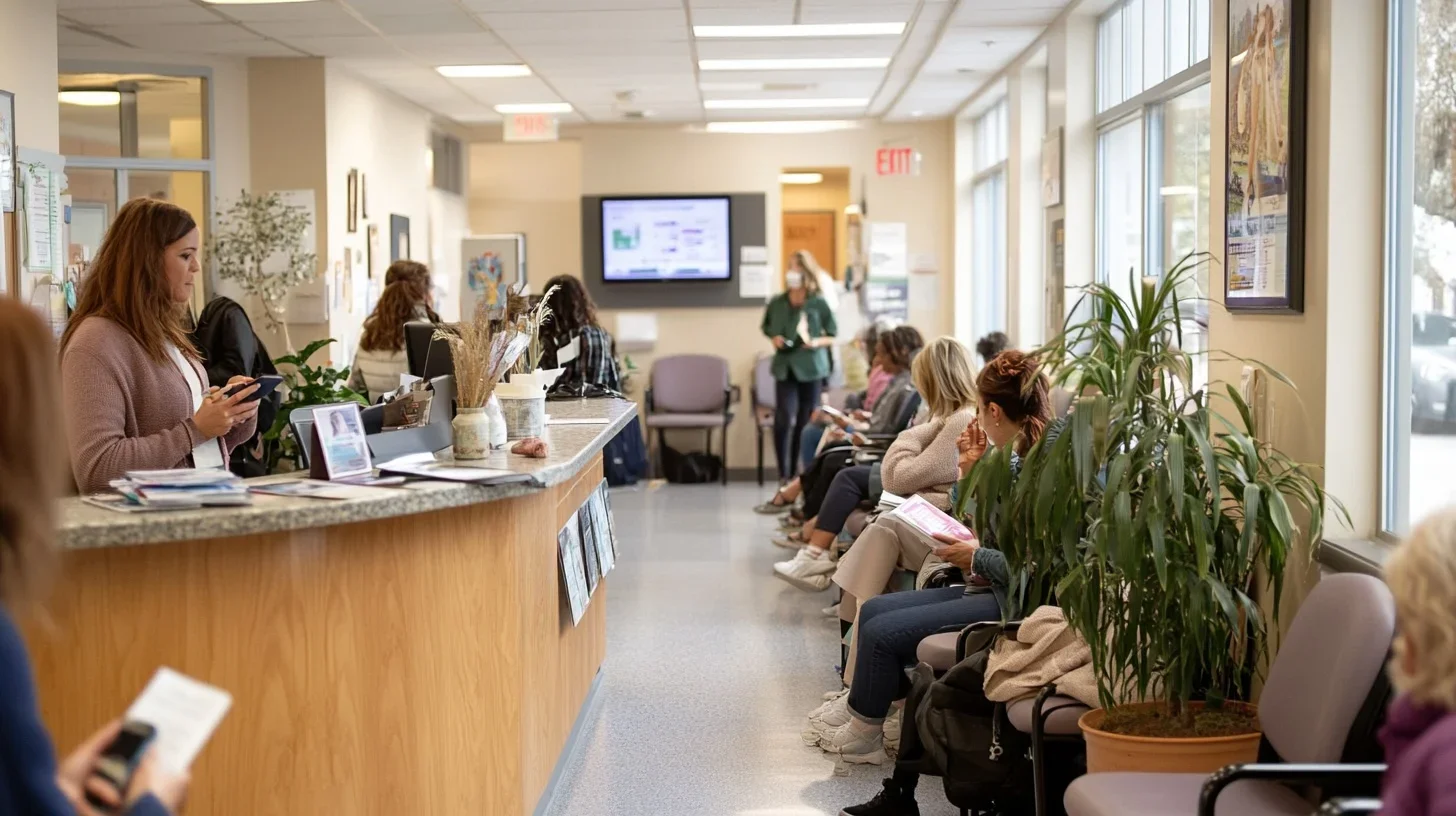
Research published in the Journal of the American Board of Family Medicine found that the average primary care physician panel size in a traditional model runs between 1,200 and 1,900 patients, with some studies citing figures closer to 2,300. The same research noted that a physician would need over 21 hours in a single working day to deliver all recommended preventive, chronic, and acute care to a panel that size. That math doesn't work, and it isn't meant to be a criticism of any individual physician working within it. It's simply the arithmetic of the traditional model.
Concierge and direct-care practices are built differently from the ground up. By design, they cap the number of patients a physician is responsible for at a small fraction of that number, which is what makes everything else on this list possible.
What Panel Size Actually Buys You
A smaller panel isn't just a nicer number. It translates into specific, tangible differences:
Same-day or next-day appointment availability instead of a multi-week wait for a routine concern
Direct phone or message access to your physician, rather than routing every question through a triage nurse line
Time during the visit to actually finish the sentence you started, instead of watching your doctor's hand move toward the door
A physician who has the bandwidth to remember your history without pulling up your chart mid-sentence
Room in the schedule for unhurried preventive care, not just acute problem-solving
Visit Length, By the Numbers
This is one of the most measurable differences, and it's been studied directly. An analysis of more than 21 million primary care visits, published in the journal Medical Care, found that the average primary care visit in the United States lasts about 18 minutes. That's the entire appointment: reviewing your history, addressing your concern, answering questions, and documenting the visit.
Eighteen minutes is enough time to handle one problem efficiently. It is rarely enough time to talk through a new symptom, ask a follow-up question about a medication, and still get to the preventive screening you meant to bring up. Something typically gets deferred to "next time," and next time often doesn't arrive for another year.
In my practice, visits are built to run considerably longer than that, specifically so that the conversation doesn't have to be triaged down to the single most urgent item.
Continuity of Care Isn't a Nice-to-Have
Continuity of care, meaning seeing the same physician consistently over time rather than whoever happens to be available, isn't just about comfort or familiarity. It's associated with measurable clinical outcomes.
A 2025 systematic review in the British Journal of General Practice, synthesizing 18 studies, found that higher continuity with a personal physician was associated with reduced mortality, fewer hospital admissions, and fewer emergency department visits. Separate research on older adults found that seeing a known primary care physician, rather than a new one, was associated with an 18% to 28% reduction in hospitalization risk across several categories, including medication-related admissions.
I'd put it this way in plain terms: a doctor who has seen you consistently over time notices the small deviations from your baseline that a new physician, meeting you for the first time, simply can't see yet. That pattern recognition is clinical value, not just a pleasant relationship.
What Doesn't Change
It's worth being direct about what independent concierge care does not automatically solve, because overpromising helps no one:
Your insurance coverage for hospital care, specialists, and medications typically stays the same, since membership fees cover access to your primary care physician, not a replacement for insurance
You may still be referred to specialists at a larger system when a condition genuinely requires subspecialty care
A smaller practice does not mean unlimited same-day access for every possible request, though it does mean more availability than the traditional model
The transition takes some administrative effort: transferring records, updating pharmacies, and making sure your new physician has your full history
What Actually Changes, Point by Point
To bring this back to something concrete, here's the direct comparison of structural mechanics, without naming any specific practice or system:
Appointment wait times shrink from weeks to same-day or next-day in most cases
Visit length expands from roughly 18 minutes to 30, 45, or 60 minutes depending on the complexity of the concern
Communication shifts from routed phone trees to direct physician access
Your physician's patient panel shrinks from the thousands to a number small enough that continuity is the default, not the exception
Preventive care gets scheduled time instead of competing with whatever acute issue brought you in that day
Making the Decision With Clear Eyes
If you've been sitting with the sense that your current primary care relationship isn't giving you what you actually need, and you've already ruled out that it's "just you" or "just a busy season," it might be time to look at what a structurally different model actually offers. As I've written about in 5 Signs You've Outgrown Your Primary Care Practice, there's usually a recognizable pattern behind that feeling, and it's worth naming clearly rather than continuing to work around it.
If you're curious what this actually looks like day to day in Chapel Hill specifically, What Concierge Medicine in Chapel Hill Actually Looks Like walks through the practical mechanics, and our post on why longer doctor visits lead to better health outcomes goes deeper into the research behind visit length specifically. If you're weighing this decision for your whole household rather than just yourself, Why More Families in Chapel Hill Are Choosing Concierge Primary Care covers that angle directly.
The honest answer to "what would actually change" isn't emotional; it's structural: smaller panel, longer visits, direct access, and a physician relationship built to last years instead of resetting with a new face at every appointment. If that sounds like what's been missing, schedule a meet-and-greet or call us at 919-827-0009 to talk through whether it's the right fit.
For families in Chapel Hill, Durham, Carrboro, and the surrounding Research Triangle area who are ready for a different experience of primary care, we welcome the conversation. The growing adoption of concierge medicine reflects increasing patient awareness of its benefits and a clear appetite for care that prioritizes the relationship between physician and patient above volume. That is what this practice is built to provide.